
Keep your dog moving.
Healthy joints need more than a supplement.
Running, climbing stairs, getting up from a nap, playing, and walking comfortably all depend on mobility.
A dog's hip and joint routine includes nutrition, appropriate exercise, healthy body condition, and timely treatment of painful conditions.
Whole foods can contribute nutrients to that routine. They do not replace veterinary care for arthritis, injuries, or other mobility problems.
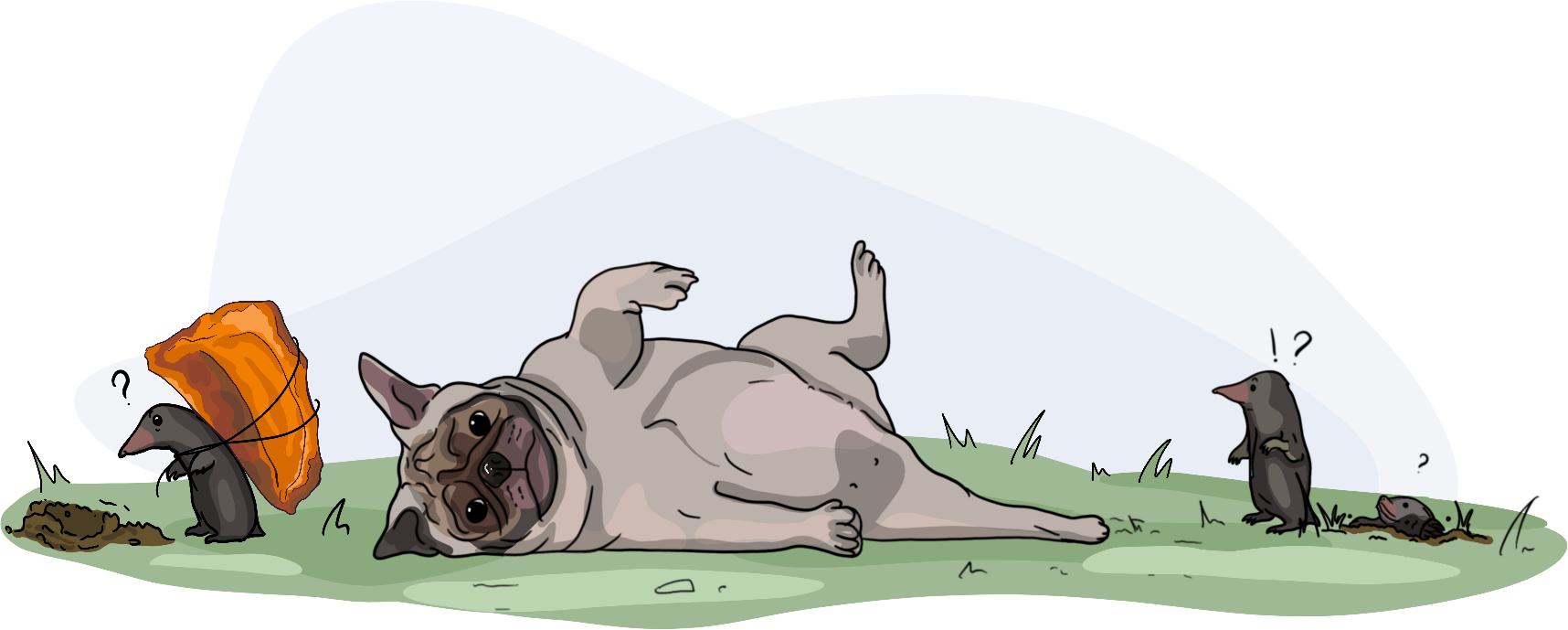
Your dog's weight changes the work their joints must do.
Extra body fat adds physical load and contributes to biological processes involved in inflammation and osteoarthritis.
Maintaining a lean body condition is one of the best-supported steps for long-term mobility.
This is especially relevant for large and giant breeds, older dogs, dogs with reduced activity, and dogs that are recovering from weight gain.
But weight alone doesn't tell the whole story. A muscular working dog and a sedentary dog may weigh the same while having very different body conditions.
Can you feel your dog's ribs?
A Body Condition Score helps estimate whether your dog has too little, appropriate, or excess body fat.
The original Real Dog weight-management guide used a five-point scale:
- 1/5 — Very thin: Ribs, spine, and other bones are prominent. Very little body fat is present.
- 2/5 — Underweight: Ribs are easy to feel and the waist is pronounced.
- 3/5 — Ideal: Ribs are easily felt without excess fat, with an obvious waist from above.
- 4/5 — Overweight: Ribs are more difficult to feel beneath fat, and the waist becomes less visible.
- 5/5 — Obese: Heavy fat deposits and a poorly defined waist or abdominal outline are apparent.
Many veterinary teams use a nine-point scale instead, where approximately 4–5/9 is considered ideal for most dogs.
Ask your veterinary team to assess both body condition and muscle condition, especially for senior dogs.
What's in the food matters. So does how much you feed.
Real Dog offers whole-food ingredients associated with cartilage, connective tissue, and seafood nutrition. These are not clinically dosed joint treatments — they fit inside a complete feeding and weight-management plan.



Don't forget the treats when counting calories.
Your dog's daily food includes more than breakfast and dinner.
Training treats, chew sessions, toppers, table scraps, and food used for enrichment all add to daily intake.
For most healthy dogs, treats and other non-complete foods should generally stay within about 10% of total daily calories, unless a properly formulated nutrition plan accounts for them.
If weight loss is needed, work with a veterinarian to establish the appropriate calorie target. Simply reducing a balanced meal without planning can reduce essential nutrient intake.
Watch movement, not just the number on the scale.
Track the activities your dog can perform comfortably.
Can your dog rise from rest without unusual difficulty? Are walks becoming shorter? Do they hesitate before stairs or jumping? Are they stiff after activity?
These observations can help you notice change, but they cannot determine whether your dog has arthritis, a ligament injury, or another condition.
Sudden limping, persistent stiffness, or signs of pain need veterinary evaluation.
Active dogs, older dogs, and the people caring for them.

Pet parents of senior dogs
Monitor weight, movement, and food portions as dogs age.

Working-dog families
Keep body condition and reward intake in view during activity.

Veterinarians & vet staff
Fold feeding history and body-condition tracking into mobility care.

Nutritionists & coaches
Organize food records and portion information.

Walkers & handlers
Notice changes in stamina, gait, or willingness to move.

Pet retailers
Explain cartilage and seafood products without promising joint repair.
What if your dog already has joint pain?
Support movement for the long run.
A good mobility plan starts with a healthy body condition, appropriate daily activity, and attention to changes.
Use food to support the plan, not to replace it.
Related: Skin & Digestive Support | High-Value Rewards
Perfect Fit. Guaranteed.
Tell us what your dog loves, dislikes, and needs to avoid. We'll help you select from our current menu. If your dog doesn't enjoy an eligible item, our provides free replacements.